
Did you know the air inside your home can be up to five times more polluted than outdoor air? That fact surprises many Orlando homeowners. You spend about 90% of your time indoors. Yet you rarely think about the air you breathe. Do you have more allergies, frequent headaches, or ongoing breathing problems? Your home's air quality may be the hidden cause.
Indoor air quality is not just about comfort. It is about your health. Dust mites, pet dander, volatile organic compounds (VOCs), and mold spores can hide in your home. These unseen pollutants affect everyone. Kids, older family members, and people with health issues feel it most. The good news? With the right plan and professional indoor air quality help, you can make your home a healthier place.
In this guide, you'll learn how indoor air quality services work in Central Florida. You'll learn about common pollutants. You'll also find fixes that make a real difference in your home. Maybe you have a specific air problem. Maybe you just want a healthier home. Either way, you'll get simple, practical steps to breathe easier.
What Exactly Is Indoor Air Quality and Why Should You Care?
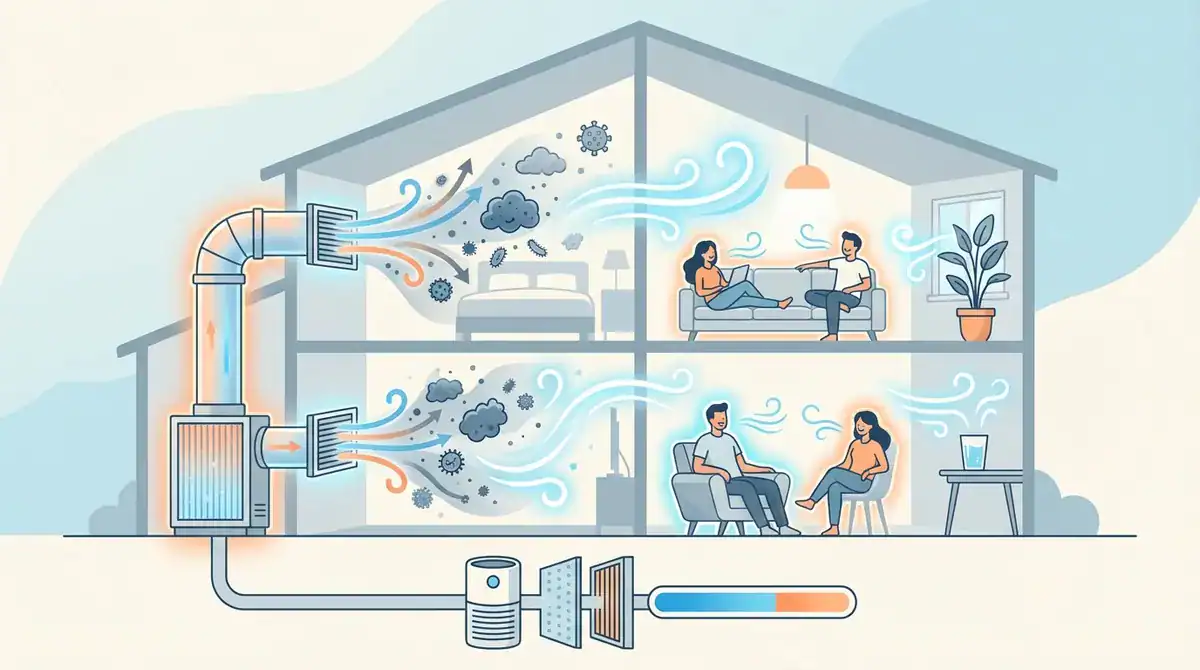
Indoor air quality (IAQ) means the condition of the air inside a building. It covers how that air affects your health and comfort. Think of it as the unseen environment around you every moment at home. You can't see air quality. But you can feel its effects, and so can your body.
Poor indoor air quality shows up in many ways. You might sneeze often. You might get itchy eyes or a scratchy throat. Some people get headaches that fade when they leave the house. Others notice worse asthma or poor sleep. These are not small annoyances. They are your body's way of telling you something needs attention.
The Hidden Culprits in Your Home
Your home holds more pollutants than you might think. Common sources include:
- Biological contaminants: Dust mites, mold spores, pet dander, and pollen. They build up in carpets, furniture, and air ducts
- Chemical pollutants: VOCs from cleaning products, paint, furniture, and building materials. They release gas into your living space
- Combustion byproducts: Carbon monoxide and other gases from gas stoves, fireplaces, and attached garages
- Particulate matter: Dust, dirt, and smoke particles that move through your HVAC system
- Excess moisture: High humidity. It gives mold and bacteria a perfect place to grow
How Do Professional Indoor Air Quality Services Work?
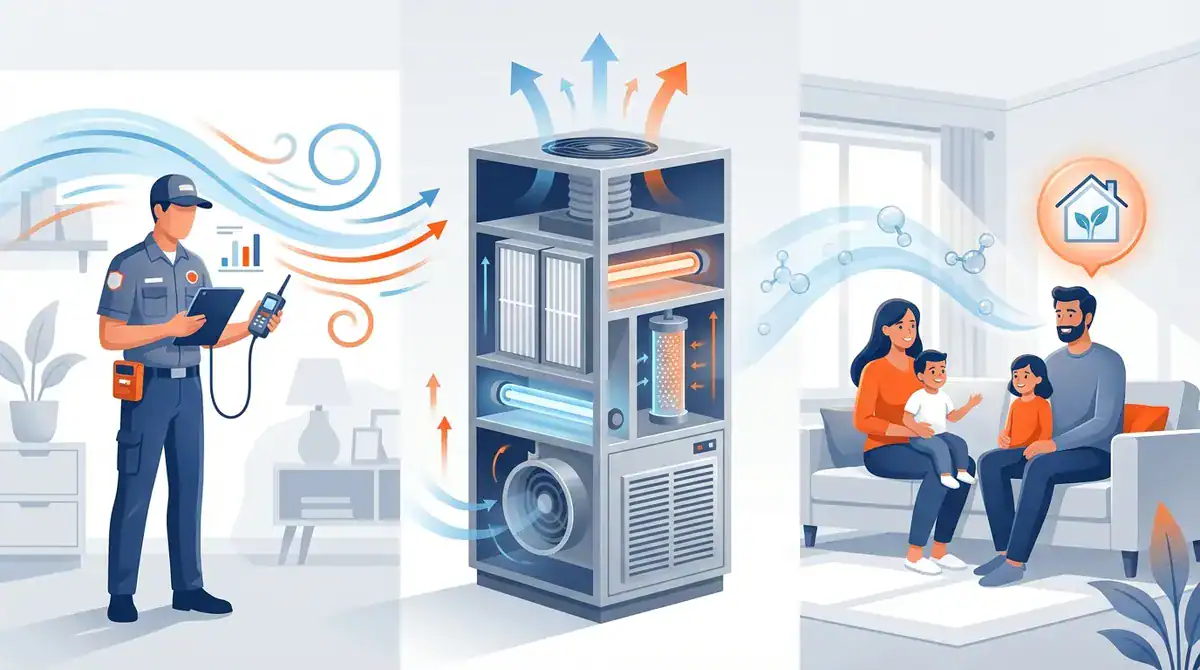
Professional indoor air quality services take a full look at your home. They find air problems and fix them. There is no guessing. There are no one-size-fits-all fixes. The goal is to understand your specific home and build a targeted plan that works.
When you work with experts like Smart Home Air and Heat, the process starts with a full check of your home. Techs use special tools to measure your indoor air. They check humidity, particle counts, VOC levels, and carbon dioxide. This data makes sure the fixes target your real problems, not guesses.
The Air Quality Assessment Process
A full air quality assessment includes several key steps:
- Visual inspection: Techs check your HVAC system, ductwork, and living spaces. They look for contamination, moisture damage, or ventilation problems
- Air sampling: Pro-grade equipment collects air samples from different areas of your home. This shows which pollutants are present and how much
- Humidity measurement: Humidity between 30-50% keeps you comfortable and helps stop mold growth
- System evaluation: Your heating and cooling system gets checked for filtration, ventilation, and overall performance
- Detailed reporting: You get a clear report. It explains what was found and which fixes fit your home
What Solutions Can Transform Your Indoor Air Quality?
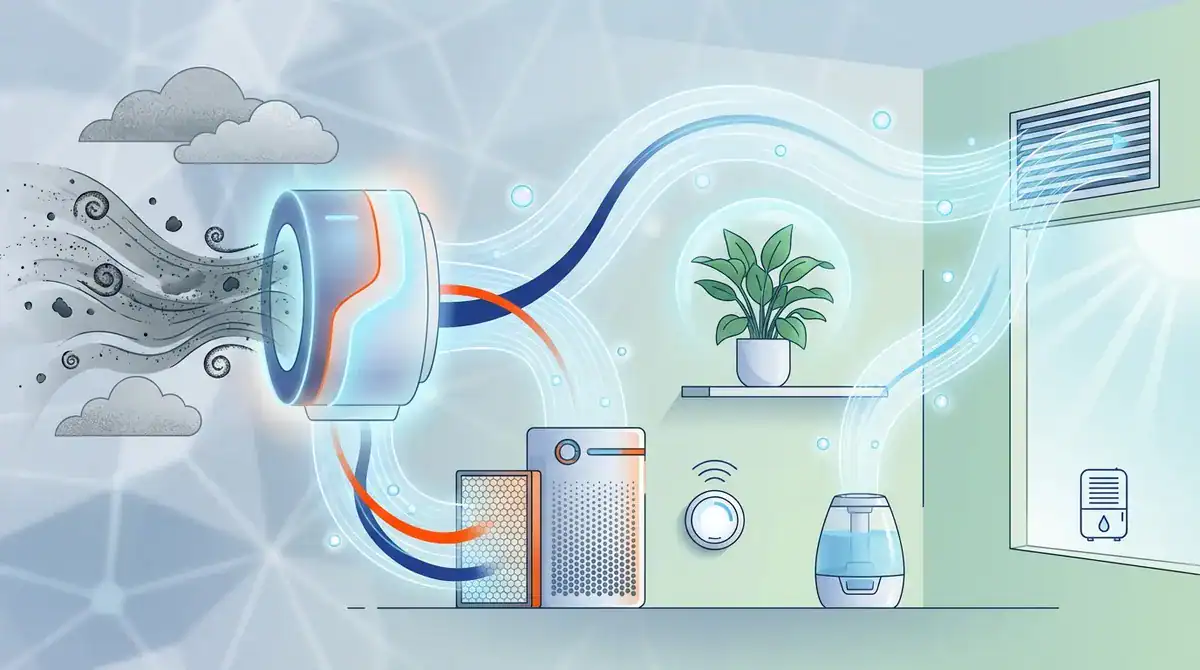
Once you know the problems, many fixes can greatly improve your home's air quality. The right mix depends on your needs. Here are the most effective options from professional services.
Advanced Air Filtration Systems
Not all air filters work the same. Standard one-inch filters only catch large particles. Advanced systems remove tiny pollutants that basic filters miss. HEPA (High-Efficiency Particulate Air) filters capture 99.97% of particles as small as 0.3 microns. That includes bacteria, viruses, and fine dust. These systems connect to your existing HVAC system and clean the air in your whole home.
Media filters are a good middle option. They filter better than standard filters. They also don't restrict airflow like true HEPA filters can. Most are 4-6 inches thick. You replace them only once or twice per year. That makes them easy and effective for many homeowners.
UV Air Purification Technology
Ultraviolet (UV) light systems go inside your ductwork or air handler. They destroy biological contaminants at the molecular level. They work well against mold, bacteria, and viruses. Those germs grow in the moist parts of your HVAC system. UV purifiers run silently around the clock. They need little maintenance and give powerful protection.
| Solution Type | Best For | Effectiveness | Maintenance Level |
|---|---|---|---|
| HEPA Filtration | Allergies, asthma, fine particles | Very High | Filter changes every 6-12 months |
| UV Air Purifiers | Mold, bacteria, viruses | High | Bulb replacement annually |
| Whole-Home Dehumidifiers | Humidity control, mold prevention | High | Seasonal cleaning |
| Air Scrubbers | Odors, chemicals, overall purification | Very High | Minimal maintenance |
| Ventilation Systems | Stale air, CO2 buildup | High | Annual inspection |
Humidity Control Solutions
Good humidity control is key to healthy indoor air. Too much moisture helps mold and dust mites grow. Too little causes dry skin and irritated airways. It can also make you more likely to get sick. Whole-home humidifiers and dehumidifiers work with your HVAC system. They keep humidity at the right level all year.
These systems run on their own. They adjust humidity as conditions change, with no effort from you. They treat your whole home, not just one room. That makes them far more effective and convenient than portable units.
When Should You Consider Professional Air Quality Services?
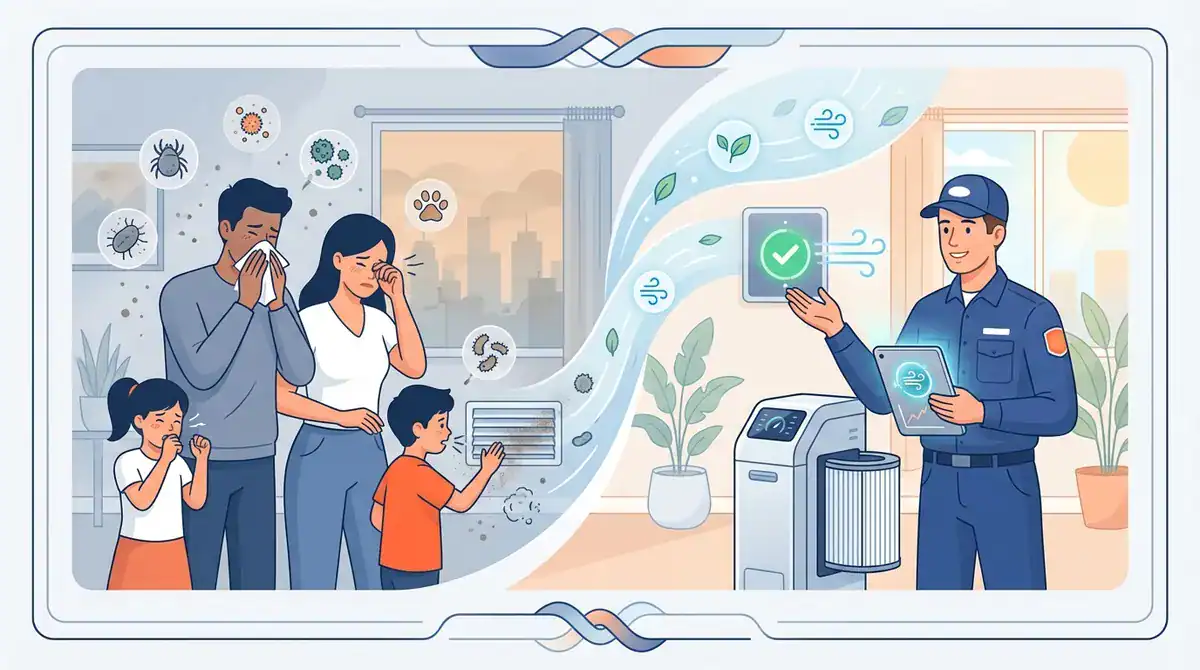
Some warning signs mean it's time to act on your indoor air quality. Don't wait for problems to get severe. Early action can prevent health issues and costly repairs down the line.
Red Flags That Demand Attention
- Persistent allergy symptoms: Do you sneeze, cough, or get watery eyes at home but feel better elsewhere? Poor air quality is the likely cause
- Visible mold growth: Any mold you can see means excess moisture. It can signal serious air quality problems that need attention right away
- Musty or stale odors: Smells that linger after cleaning point to hidden contamination or poor ventilation
- Excessive dust: Do surfaces get dusty again right after you clean? Your HVAC system may be spreading particles
- Uneven temperatures: Hot and cold spots can mean poor airflow and ventilation issues that hurt air quality
- Recent renovations: New paint, flooring, or furniture can release VOCs that lower air quality for a while
How Does Ductwork Impact Your Air Quality?
Your home's ductwork works like the lungs of your living space. Like lungs, it must stay clean to work well. Over time, dust, debris, pet hair, and even mold build up in your ducts. Then your system blows them through your home every time it runs.
Professional ductwork services include deep cleaning and inspection. Techs remove contaminants and find any leaks or damage. Leaky ducts don't just waste energy. They pull in dust, insulation fibers, and other pollutants from attics, crawl spaces, and wall cavities. Those end up in the air you breathe.
Signs Your Ducts Need Professional Attention
- Visible dust buildup: Dust around supply vents or return grilles means more buildup likely hides throughout the system
- Unexplained respiratory problems: Dirty ducts can trigger or worsen asthma, allergies, and other breathing problems
- Rodent or insect infestations: Pests in ductwork leave droppings and debris that dirty your air supply
- Recent home purchase: Just bought a home and don't know the duct cleaning history? An inspection gives you peace of mind
What Role Does Your HVAC System Play in Air Quality?
Your heating and cooling system is the heart of your home's air quality. A well-kept system filters, vents, and controls humidity the right way. It can transform your indoor environment. A neglected system does the opposite. It becomes a source of pollution instead of a solution.
Regular HVAC maintenance is key for good air quality. During a visit, techs clean parts and replace filters. They check for mold, make sure drains work, and test your air quality equipment. These steps catch small problems before they become major issues.
The Connection Between System Performance and Air Quality
Many homeowners don't know that system performance affects air quality. A weak system with poor airflow can't filter or ventilate your home well. An oversized system shuts off too fast to remove humidity. An undersized one runs nonstop and still can't hold the right temperature.
Do you have air quality issues along with comfort problems? You might need AC installation or system upgrades. Modern high-efficiency systems filter better and control humidity better. Their variable-speed operation keeps air moving for superior air quality.
Can Smart Technology Improve Your Indoor Air Quality?
The answer is a big yes! Smart technology has changed how we watch and control indoor air quality. Smart thermostats and air quality monitors show real-time data about your home. That helps you make informed choices and quick adjustments.
Advanced smart thermostats can control humidity levels. They can adjust ventilation based on who is home. They even remind you when it's time to change filters or schedule maintenance. Some systems include air quality sensors. When pollutants show up, the system adjusts on its own. You get protection without constant attention.
Benefits of Smart Air Quality Management
- Real-time monitoring: Track temperature, humidity, and air quality from your smartphone, wherever you are
- Automated adjustments: Systems respond to changes on their own and keep air quality high 24/7
- Energy efficiency: Smart controls cut energy waste while improving air quality
- Maintenance reminders: Get alerts about filter changes and service needs before problems start
- Historical data: Track trends over time to spot patterns and catch issues early
What About Emergency Air Quality Situations?
Some air quality problems need help right away. Do you smell gas? Suspect carbon monoxide? See major mold growth? Have severe breathing symptoms at home? Don't wait — call for emergency service. These situations can put your health at serious risk and demand a fast response.
Smart Home Air and Heat knows air quality emergencies can't wait. That's why they guarantee arrival within 90 minutes of your call. A fast response can keep a small problem from becoming a health crisis. That matters most for children, elderly relatives, and anyone with breathing conditions.
How Much Do Indoor Air Quality Services Cost?
The cost to improve your indoor air quality depends on your needs and the fixes you choose. Simple upgrades like better filters might cost just a few hundred dollars. Full whole-home purification systems can run several thousand.
But think about the value. The EPA estimates poor indoor air quality costs the U.S. economy tens of billions each year. That covers medical bills and lost productivity. Better air at home can mean fewer doctor visits, lower medication costs, and fewer sick days. It can also prevent long-term health problems. That makes it one of the best investments in your family's wellbeing.
| Service/Solution | Typical Cost Range | Lifespan/Frequency |
|---|---|---|
| Air Quality Assessment | $200-$500 | One-time or as needed |
| Premium Air Filters | $30-$100 each | 3-12 months |
| HEPA Filtration System | $1,000-$2,500 | 10-15 years |
| UV Air Purifier | $600-$1,200 | 5-10 years |
| Whole-Home Humidifier/Dehumidifier | $1,500-$3,000 | 10-15 years |
| Duct Cleaning | $400-$1,000 | Every 3-5 years |
Making the Investment Worthwhile
Want the most from your air quality upgrades? Pair professional services with smart daily habits. Change filters often. Control indoor humidity. Run exhaust fans when you cook or shower. Keep your home clean and maintain your HVAC system. These simple steps keep your air cleaner between service visits.
Where Can You Find Reliable Indoor Air Quality Services?
Choosing the right indoor air quality company matters. You want trained, experienced techs with quality equipment and products. Look for companies that use EPA-approved testing methods. Pick one that offers real solutions, not just sales pitches. Make sure they stand behind their work with solid guarantees.
Central Florida residents can count on Smart Home Air and Heat for professional indoor air quality solutions. Their team brings years of experience and a focus on customer satisfaction. They fix the root causes of air problems, not just the symptoms. That means lasting results that truly improve your home. Check out their excellent reviews on Google to see what happy customers say about their service.
Before you hire, ask about testing methods, solution options, tech certifications, and service guarantees. A good company will explain its process. It will gladly answer every question before you commit to any services.
Taking Control of Your Indoor Air Quality Today
Your home should be your sanctuary. It should be a place where you breathe easy and feel your best. Poor indoor air quality quietly wears down your health and comfort. The good news? Real fixes are easy to get. From simple filter upgrades to whole-home purification systems, you have options for your needs and budget.
Don't wait for bad air to affect your health or quality of life. Maybe you fight allergies. Maybe you worry about mold. Maybe you just want the healthiest home for your family. Professional indoor air quality services give you the expert help and fixes you need. Clean, healthy air pays you back with better health, better sleep, more comfort, and peace of mind. You'll know you're protecting what matters most.
Remember, your HVAC system works hard to keep you comfortable. Make sure it also keeps you healthy. With the right testing, targeted fixes, and regular upkeep, you can enjoy the fresh, clean air you deserve. For more about air quality and other HVAC services, visit Facebook or check out helpful videos on YouTube.
Ready to breathe easier in a healthier home? Schedule service today. Take the first step toward better indoor air quality for you and your family!
Indoor Air Quality FAQs
Q: How often should I have my indoor air quality tested?
A: Test your air quality any time you notice symptoms like more allergies or breathing issues. Also test after renovations or when you move into a new home. For prevention, test every 2-3 years. Test yearly if anyone in your home has asthma or allergies. Think of it as a check-up for your home's breathing system!
Q: Can indoor air quality services help with pet allergies?
A: Absolutely! Solutions like HEPA filtration systems and advanced air purifiers can greatly reduce pet dander. Dander is one of the most common allergens. Add regular duct cleaning and good humidity control, and these services can make a huge difference. Pet owners who love their furry friends but struggle with allergies will feel it.
Q: What’s the difference between an air purifier and better HVAC filters?
A: Great question! HVAC filters work passively as air passes through your system. Dedicated air purifiers actively clean the air. Many use UV light or ionization. Filters are your first line of defense. Whole-home purification systems add extra protection. They catch smaller particles, biological contaminants, and odors that standard filters might miss.
Q: Will improving my air quality also lower my energy bills?
A: It can! Clean ducts, good filters, and well-kept parts help your HVAC system run better. It doesn't have to work as hard. Plus, many air quality upgrades, like smart thermostats and right-sized systems, cut energy use. So you'll breathe easier and may save money too. It's a win-win!
Q: How long does it take to notice improvements after air quality services?
A: Many people notice a difference within days. That's especially true if you had clear issues like musty odors or heavy dust. Allergy and breathing symptoms may improve over 2-4 weeks as your system keeps cleaning the air. The key is consistency. Keep up with filter changes and maintenance so those improvements last for the long haul.
Need help in your neighborhood? Smart Home Air and Heat serves Orlando, East Orlando, Winter Park, Lake Nona, and Oviedo and all of Central Florida with 24/7 availability and upfront pricing.