
Key Takeaways
- Damaged air ducts can waste up to 30% of your cooled or heated air. That raises energy bills and hurts home comfort.
- Common duct problems include leaks, loose sections, and physical damage. Watch for uneven room temperatures and higher energy bills.
- Most repairs cost $200 to $708. Minor fixes run about $200-$500. Bigger jobs can reach $1,000 or more.
- If repairs cost close to 50% of a full replacement, new ductwork is often the smarter buy. It saves energy for years.
- Choose an HVAC contractor with a license, insurance, industry certifications, and good customer reviews.
Is your heating and cooling system not working like it should? The problem may not be your HVAC unit at all—it could be your air ducts. Damaged, leaky, or loose ductwork can waste up to 30% of your conditioned air. That drives up energy bills and makes your Orlando home less comfortable.
Reliable ductwork repair keeps your home healthy and efficient. This guide shows you how to find trusted air duct repair pros near you. You'll also learn what repairs cost and whether repair or replacement makes more sense for your home.
Maybe you can see duct damage. Maybe some rooms feel hotter than others. Or maybe you just want a more efficient system. Either way, knowing the air duct repair process helps you make smart choices.
We'll cover the warning signs that mean you need repairs. We'll show you what to look for in a contractor, and how to get quality work at a fair price. By the end, you'll be ready to schedule service with a trusted provider in your area.
Understanding Common Air Duct Problems
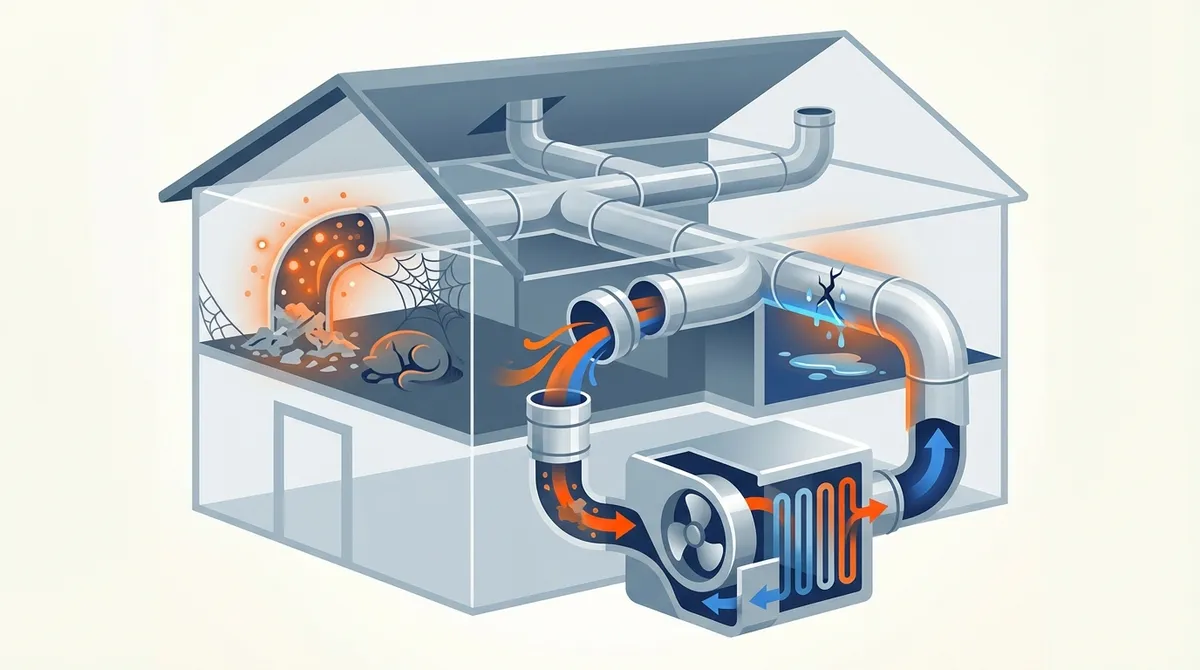
Before you search for repair services, it helps to know what goes wrong with ducts. Air ducts are the tubes that carry heated or cooled air through your home. They wear out over time. Leaks are the most common problem. They often start at the joints where duct sections meet.
Those leaks let conditioned air escape into attics, crawl spaces, or wall cavities. You end up cooling spaces you never use while your living areas suffer.
Disconnected ducts are another common issue, especially in older homes or after a remodel. When duct sections come apart, whole rooms may get little or no airflow. Pests, water leaks, or a stray hit during a home project can punch holes in ducts or crush flexible ductwork.
Poor installation causes trouble too. Weak supports, sharp bends, or undersized ducts cut efficiency and wear the system out early.
Recent data puts the average HVAC duct repair at $580 to $708 per repair. Minor fixes, like sealing small leaks, usually run $200 to $500. Knowing these common issues helps you talk clearly with contractors. It also helps you tell whether your problems match typical duct failures.
Signs Your Air Ducts Need Repair
Catch duct problems early and you can avoid a costly emergency. Here are the most common signs your ductwork needs a pro:
- Inconsistent temperatures: Some rooms feel much warmer or cooler than others, no matter the thermostat setting
- Increased energy bills: Heating or cooling costs jump even though your usage has not changed
- Reduced airflow: Weak air comes from certain vents or whole sections of your home
- Strange noises: You hear rattling, whistling, or banging when your HVAC system runs
- Visible damage: You can see gaps, holes, or loose sections in exposed ductwork
- Excessive dust: Dust builds up faster than normal, especially near vents
- Poor air quality: You notice more allergies, musty smells, or stuffy air indoors
Seeing several of these signs? It's time to call a pro. Smart Home Air and Heat offers full duct inspections to find problems and recommend the right fix. For urgent issues, the team guarantees arrival within 90 minutes of your call.

How to Search for Air Duct Repair Services
Finding good air duct repair pros in your area takes a smart plan. Start with online searches. Use terms like "air duct repair near me" or "ductwork repair" plus your city or neighborhood name. This helps search engines show you local results. Don't stop at the first few listings, though. Paid ads don't always mean the best service.
Check several sources to build a list of possible contractors. Google Business Profile listings show customer reviews, response times, and photos of finished work. Look for steady positive feedback. Pay close attention to notes about punctuality, honest pricing, and work quality.
Social media sites like Facebook add more customer stories and show how companies interact in real time.
Ask friends, family, and neighbors for names, especially anyone who just had duct work done. Personal referrals often lead to reliable contractors who protect their local reputation. You can also check trade groups. Try the Air Conditioning Contractors of America (ACCA) or the North American Technician Excellence (NATE) program to find certified pros near you.
Key Qualifications to Look For
Not every HVAC contractor is qualified for duct repair. Before you hire anyone, check these key credentials:
- Proper licensing: Make sure the company holds a current HVAC contractor license for your state or area
- Insurance coverage: Confirm they carry liability insurance and workers' compensation so you're protected from claims
- Industry certifications: Look for NATE certification or factory training credentials
- Experience level: Ask how long they've been in business and how many duct repair jobs they finish each year
- Warranty offerings: Good contractors back their work with written warranties on labor and materials
Ask contractors about their credentials directly. Professional companies share this info gladly. Many post it right on their websites and marketing materials. Companies like Smart Home Air and Heat proudly show their credentials and service guarantees. That's a sign they stand behind their work.

Evaluating Repair Costs and Getting Quotes
Knowing duct repair costs helps you budget and spot fair pricing in estimates. Minor duct repairs usually cost $200 to $700. That covers sealing small leaks, reconnecting loose sections, or replacing short damaged runs. Bigger jobs with several problem areas, or partial duct replacement, can reach $1,000 or more.
Full duct replacement costs vary based on several factors. The national average is about $1,251. Most homeowners pay between $453 and $2,185, depending on the job. For larger homes (2,500 to 3,000 square feet), complete replacement usually runs $3,000 to $6,000.
Contractors often price duct replacement per linear foot. Expect $25 to $60 per foot based on material and insulation needs. Material choice matters a lot. Flexible ducts cost the least at $1 to $4 per linear foot. Fiberboard runs $4 to $6 per foot. Sheet metal ducts—the most durable option—run $7 to $13 per linear foot.
Getting Accurate Estimates
Want accurate repair quotes? Follow these steps when you contact contractors:
- Schedule in-home inspections: Skip contractors who quote over the phone without seeing your ductwork
- Request detailed written estimates: Ask for itemized breakdowns of labor, materials, and any extra fees
- Compare multiple quotes: Get at least three estimates so you know the fair price range for your project
- Ask about hidden costs: Ask about possible extra charges for permits, disposal, or surprises
- Clarify payment terms: Learn the deposit rules, payment schedule, and accepted payment methods
Watch out for quotes far below the rest. They can signal cut corners, cheap materials, or hidden fees that show up later. Quality HVAC maintenance and repair work takes skilled labor and good materials. Both come at fair market prices.

Deciding Between Repair and Replacement
Should you repair your ductwork or replace it all? It's one of the biggest choices you'll face. Start with the age and condition of your current ducts. Ducts over 15 years old with several problem areas often cost less to replace than to keep fixing.
The "50% rule" is a handy guide. If repairs would cost 50% or more of a full replacement, replacement usually offers better value. Say repairs would cost $2,000 and complete replacement is $3,500. Paying the extra $1,500 for a brand-new system makes financial sense.
You get better efficiency, better materials, and decades of trouble-free use. That beats patching an aging system again and again.
Look at how far the damage spreads. If problems sit in just one or two spots—say from water damage or pests—targeted repairs work well. But maybe several sections show wear, leaks run through the whole system, or comfort problems never go away. In that case, replacement fixes everything at once.
Long-Term Cost Considerations
Think about the total cost over time. Repairs cost less up front, but they may not fix deeper efficiency problems. Leaky or poorly designed ductwork can waste 20-30% of your heated or cooled air. That adds up to hundreds of dollars in extra energy costs each year.
New ductwork built to today's standards pays off over time. Modern duct systems seal better, insulate better, and match your HVAC equipment's size. These upgrades can cut energy use by 15-30%. Lower utility bills quickly offset the higher up-front cost. New ducts also mean fewer service calls and repairs in the years ahead.
Planning other home upgrades, like AC installation or a smart thermostat? Pair them with your ductwork replacement. You'll save on labor costs, and your whole system will work together at its best.
Preparing for the Repair Appointment
Picked a contractor and booked your repair? A few simple steps help the work go smoothly. Clear a path to every area with ductwork, including attics, basements, and crawl spaces. Move stored items, belongings, or anything else that could slow the techs down.
Have pets? Plan to keep them in a separate room during the visit. HVAC work often means open doors, techs moving through the house, and loud tools that can scare animals. Keeping pets contained protects them and the techs.
Write down your questions and concerns before the techs arrive. Note rooms with temperature problems, vents with weak airflow, and any odd sounds you've heard. This info helps techs find problems faster. It also makes sure they cover all your concerns during the visit.
What to Expect During Repairs
Knowing the typical repair process helps you spot what's normal and what's not. Most duct repair visits follow this order:
- Initial inspection: Techs check the ductwork they can reach and may use special tools to find leaks
- Problem confirmation: They explain what they found and confirm the repair plan with you
- Repair work: They seal leaks, reconnect sections, or replace damaged ducts as needed
- System testing: They run your HVAC system to check airflow and function
- Final walkthrough: They review the finished work and answer your questions
Most minor duct repairs take 2-4 hours. Bigger jobs may need a full day or several visits. Good contractors keep disruption low and clean up before they leave. Companies serving communities throughout Orlando and Central Florida like Smart Home Air and Heat know the local building codes. They also understand how Florida's climate affects ductwork.
Maintaining Your Ductwork After Repairs
Good maintenance after repairs makes your ductwork last longer and prevents new problems. Schedule HVAC inspections every year, before cooling season and before heating season. Small issues get caught before they turn into costly repairs. During these visits, techs check duct connections, look for new leaks, and make sure your system runs at peak efficiency.
Change your HVAC filters as the maker recommends, usually every 1-3 months. Filter type and household conditions affect the timing. Clean filters keep airflow strong and ease strain on your ducts. Clogged filters make your system work harder. That can create pressure problems that stress duct joints and seals.
Watch for the warning signs covered earlier: uneven temperatures, odd noises, or rising energy bills. Fix small problems fast so they don't grow into major repairs. You might also add indoor air quality upgrades like UV lights or air purifiers. They cut down the contaminants that build up in ductwork and drag down efficiency.
When to Schedule Professional Inspections
Some situations call for a professional duct inspection even if nothing seems wrong:
- After big weather events, like hurricanes or severe storms, that may have damaged hidden ductwork
- After home remodels that touched walls, ceilings, or attic spaces where ducts run
- When you buy a new home, especially if you don't know the duct system's age
- If you find pests in areas where ductwork runs
- Before and after major HVAC equipment upgrades, to make sure the system matches
Early inspections often catch small issues that are cheap to fix right away. Left alone, those same issues can turn costly. This prevention-first approach saves money over time and keeps your home comfort steady.
Special Considerations for Different Duct Types
Different duct materials need different repair methods. Each type has its own strengths and limits. Knowing your duct type helps you talk clearly with contractors. It also sets fair expectations for repairs and lifespan.
Flexible ducts are wire coil covered with plastic and insulation. They're common in modern homes because they're cheap and easy to install. They're also the easiest to crush, kink, or tear. Repairs often mean replacing whole damaged sections instead of patching. Replacement material runs $39.95 to $170 for 25 feet of insulated duct.
Sheet metal ducts are made from galvanized steel or aluminum. They last the longest. They resist pests, hold their shape, and rarely leak. When metal ducts do fail, pros can often fix them with welding, metal patches, or sealing. They cost more to install ($7-$13 per linear foot), but metal ducts often outlast other materials.
Fiberboard ducts are made from pressed fiberglass strands. They insulate well but break down over time, especially in humid Central Florida air. They're harder to seal than metal ducts. When damaged, they often need replacement instead of repair. If your fiberboard ducts show wear, talk with your contractor about a long-term replacement plan.
Finding Emergency Duct Repair Services
Some duct problems can't wait for a scheduled visit. A full disconnection that leaves rooms with no heating or cooling is an emergency. So is a major leak found during extreme weather, or water damage to your ductwork. These call for a fast response.
For emergencies, look for companies that offer 24/7 service and fast response times. Smart Home Air and Heat, for example, guarantees arrival within 90 minutes of your call. That promise matters most during an HVAC emergency. Keep your trusted emergency service provider's number handy. Save it in your phone or post it near your thermostat.
Emergency service usually costs more. You're paying for after-hours help and a fast response. That extra cost is often worth it when you have no heat in a freeze or no AC in a dangerous heat wave. Ask about emergency rates when you first vet contractors. Then the price won't surprise you in an urgent moment.
Maximizing the Benefits of Professional Repair
Professional duct repair does more than fix the problem in front of you. Sealed, working ductwork boosts your whole system's efficiency and can cut energy costs by 15-30%. Your HVAC equipment cycles less often, so it lasts longer. You also lower the odds of costly equipment repairs or early replacement.
Tight ducts also mean cleaner indoor air. Leaky ducts can pull in dust, insulation bits, pest droppings, and other contaminants from attics or crawl spaces. Then they spread that debris through your home. Sealed ducts deliver only the filtered air from your HVAC system, not unfiltered air from unconditioned spaces.
Comfort improves too. Working ductwork delivers steady temperatures in every room and ends hot and cold spots. Balanced airflow means each room gets the right amount of heating or cooling. Your whole home stays comfortable no matter the weather outside.
Pair duct repair with other upgrades, like programmable thermostats, zone control, or new heating installation. Together they create an efficient, comfortable home that costs less to run and feels better to live in.
Finding reliable air duct repair near you doesn't have to feel overwhelming. Learn the common duct problems. Know which contractor credentials matter. Get accurate estimates, and weigh repair against replacement. Do that, and you can handle your ductwork needs with confidence.
Choose licensed, insured contractors with proven track records in your community. Feel free to request a quote from several providers. That's how you make sure you get quality service at a fair price.
Well-maintained ductwork supports your whole HVAC system. You'll enjoy better comfort, cleaner air, and lower energy costs for years to come. Take action today on any duct issues you've noticed. Your home comfort and your wallet will thank you.
Air Duct Repair FAQs
Q: How much does air duct repair typically cost?
A: Minor air duct repairs usually cost between $200 and $700. That covers jobs like sealing leaks or reconnecting loose sections. Bigger repairs can reach $1,000 or more. Complete duct replacement usually runs $1,400 to $7,000, depending on home size and duct material. Get quotes from several qualified contractors to make sure you pay a fair price.
Q: How do I know if I need duct repair or complete replacement?
A: Consider replacement if repair costs top 50% of replacement costs, your ducts are over 15 years old, or problems show up all over the system. Isolated damage from a recent event usually justifies repair. Widespread leaks, ongoing efficiency issues, or old ductwork usually make replacement the better value. A full inspection by a qualified pro helps you make the right call.
Q: What should I look for when choosing an air duct repair company?
A: Check that contractors hold an HVAC license, liability insurance, and workers' compensation coverage. Look for certifications like NATE. Read online reviews on Google and Facebook, and ask for references from recent customers. Good companies give detailed written estimates, back their work with warranties, and communicate clearly. Talk to several contractors before you decide.
Q: How long does air duct repair usually take?
A: Most minor duct repairs take 2 to 4 hours. That includes inspection, repair work, and system testing. Bigger jobs with several problem areas or hard-to-reach ductwork may take a full day or more than one visit. Complete duct replacement for an average home usually takes 1-3 days, based on system complexity and home size. Your contractor should give you a time estimate up front.
Q: Can leaky air ducts really increase my energy bills that much?
A: Yes! Leaky or damaged ductwork can waste 20-30% of your heated or cooled air. Your HVAC system then works harder and runs longer to keep you comfortable. That adds hundreds of dollars in wasted energy costs each year. Professional duct sealing and repair can cut energy use by 15-30%. Lower utility bills quickly offset the repair cost, and your HVAC equipment lasts longer too.
Need help in your neighborhood? Smart Home Air and Heat serves Orlando, Union Park, Mills 50, Lake Nona, and Winter Park and all of Central Florida with 24/7 availability and upfront pricing.