
Call for emergency AC repair when your system stops cooling in Orlando heat, smells like burning or smoke, leaks water inside, ices over, makes grinding or banging noises, runs without cooling, or keeps tripping the breaker. Any of the seven means shut it off and call — Smart Home answers 24/7, arrives within 90 minutes or takes $200 off, and the diagnostic is a flat $89 at 2 AM or 2 PM with no after-hours fee. Most emergency repairs run $150–$800.
Key Takeaways
- An AC failure in Orlando is an emergency. Extreme heat can harm your health, so act fast.
- Burning smells or smoke from your AC unit mean serious electrical trouble. Call a pro right away.
- Water leaking inside can wreck floors and walls. Act fast to stop mold before it starts.
- Ice on your refrigerant lines points to a serious refrigerant leak. Only a pro should fix it.
- Loud grinding or shrieking noises mean parts are failing. Ignore them and the whole system can break down.
- Does your thermostat say the system is running, but no cool air comes out? That is a serious fault. Our guide on why your AC is blowing warm air covers the most common causes that need emergency service.
Living in Orlando means dealing with scorching heat and humidity nearly year-round. When your AC suddenly fails, you are not just uncomfortable. It can turn into a real emergency. It can put your health, your safety, and your home at risk.
Knowing when to call for help right away — instead of booking a routine visit — can save you money. It can also stop more damage and protect your family from dangerous heat.
Orlando's humid climate is hard on HVAC systems. That is why emergency AC breakdowns happen more often here than in most of the country. Temperatures often climb into the 90s. The humidity makes it feel even hotter. A working air conditioner is not a luxury here — it is a must.
Maybe your system quit at 2 AM. Maybe you just see warning signs that something is seriously wrong. Either way, you need to know what counts as an emergency and what to do next. It can make all the difference.
In this guide, we walk you through the warning signs that need a pro right away. We also cover what to do while you wait for emergency service. And we show you how to pick a reliable company when every minute counts.
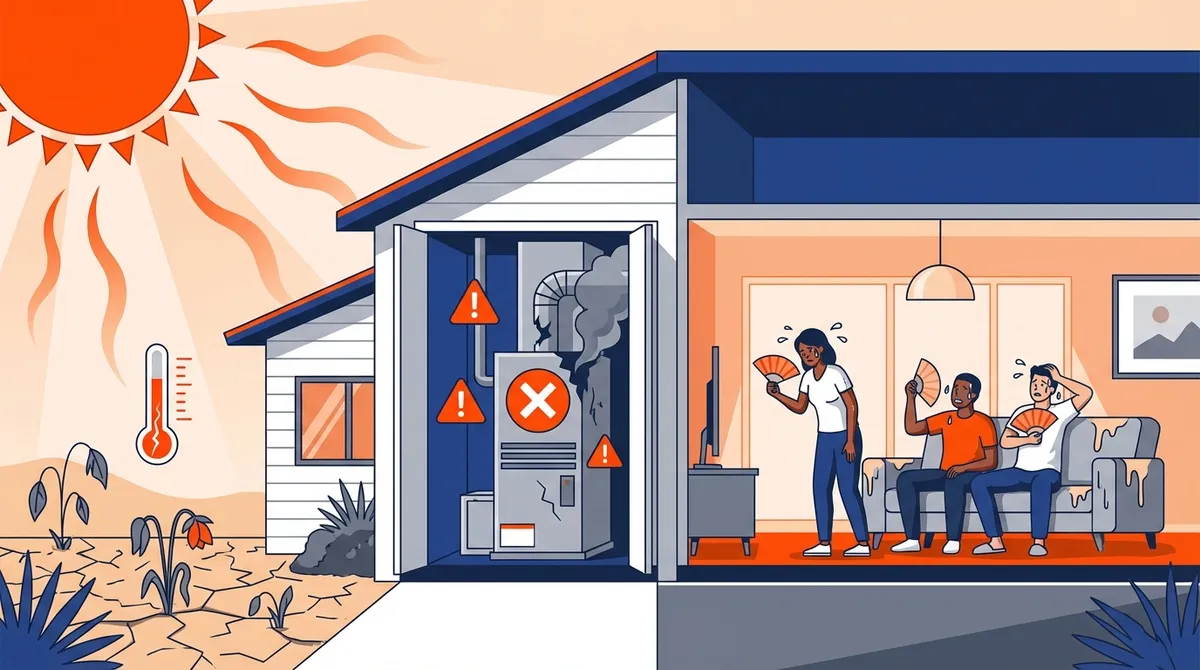
1. Complete System Failure During Extreme Heat
Did your AC stop working during Orlando's hottest months? That is a clear emergency. Total failure means no air movement and no cooling. Indoor heat rises fast. It can quickly become dangerous for older family members, young children, and anyone with health problems.
Most Orlando HVAC companies, including Smart Home Air and Heat, offer 24/7 emergency response for this exact problem. Industry data shows complete AC failure is one of the most common emergency calls in Central Florida. Calls spike during heat waves, when systems run nonstop and get pushed to their limits.
Won't turn on at all? First check your circuit breaker and thermostat batteries. Sometimes the fix is that simple. If not, get professional help right away. Common causes include compressor burnout. Learn more about what these repairs typically cost. Other causes are control board failure, bad capacitors, and refrigerant leaks big enough to trip safety shutoffs.
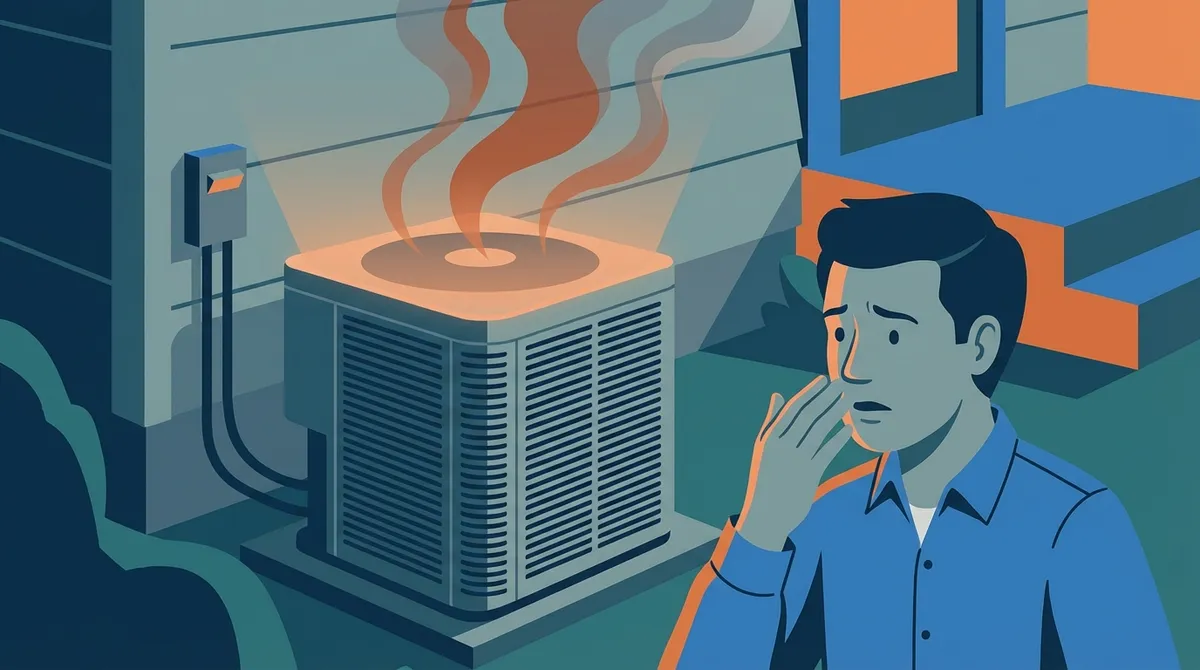
2. Burning Smell or Smoke Coming From Your Unit
Any burning smell or visible smoke from your air conditioning system is a true emergency. Act now. These signs point to serious electrical problems, overheated parts, or motor failure. Left alone, they can lead to a fire.
Do you smell burning plastic or rubber, or notice a gunpowder-like odor? Turn off your AC at the breaker box right away. Do not investigate the problem or restart the system yourself. Electrical fires in HVAC equipment spread fast and can badly damage your home.
Licensed HVAC technicians can safely find the cause. It may be burned-out wiring, a failing blower motor, or overheating from blocked airflow. Many emergency services in Orlando use NATE-certified technicians trained to handle these dangerous jobs the right way.
AC repair professionals can quickly tell you whether a fix will work or a part must be replaced. For the fastest response, contact a trusted Orlando AC repair company that guarantees arrival within 90 minutes.
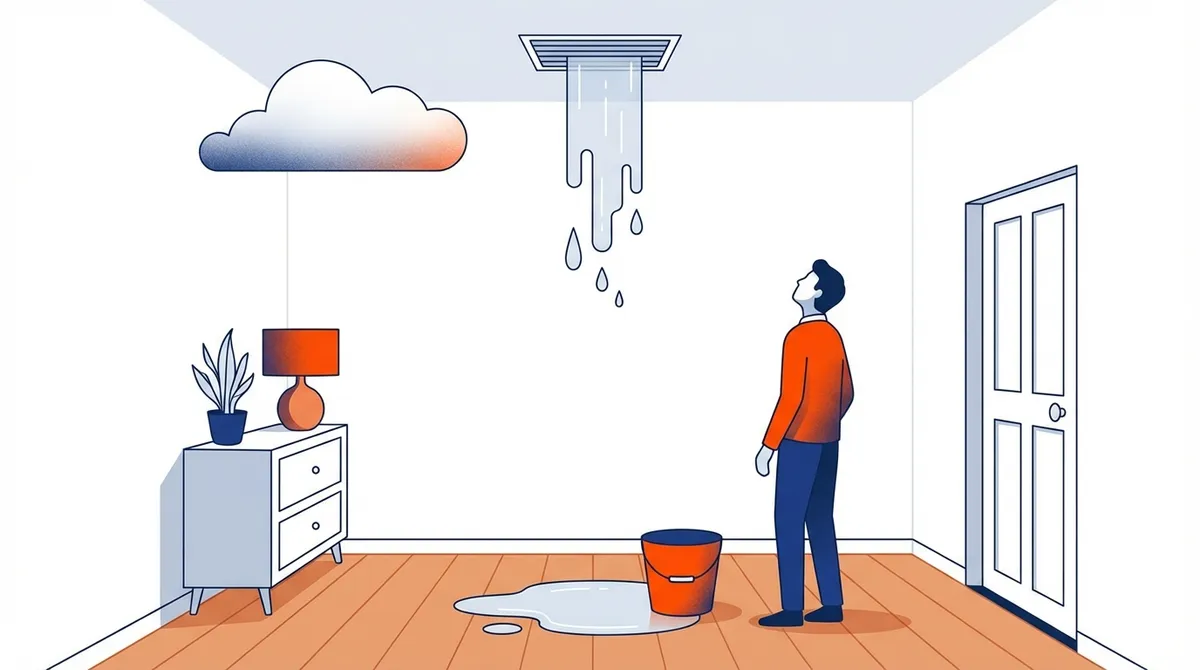
3. Water Leaking Inside Your Home
Water pooling around your indoor AC unit is a serious problem. So is water dripping from ceiling vents. Some condensation is normal. Big leaks are not. They can damage floors, walls, and ceilings. They also invite dangerous mold — a real risk in Orlando's humid air.
The most common cause of indoor water leaks is a clogged condensate drain line. Your AC pulls a lot of humidity out of the air. All that water has to drain somewhere. When algae, mold, or debris block the drain, water backs up into the drain pan. Then it overflows into your home.
Other causes include a cracked drain pan or a disconnected drain line. A frozen evaporator coil can also thaw and flood the drain system. Poor installation can block drainage too. While you wait for emergency help, set out towels or containers to catch the water. If the leak is heavy, turn the system off.
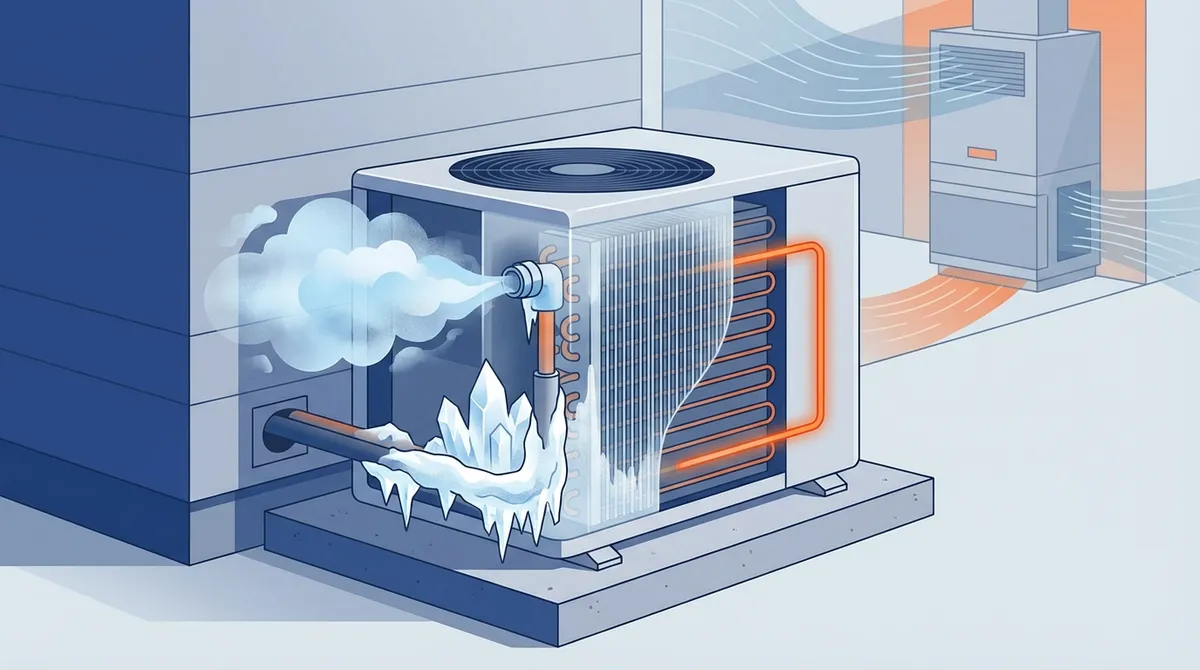
4. Refrigerant Leak With Ice Formation
Ice on your outdoor unit, refrigerant lines, or indoor evaporator coil is a red flag. Do not ignore it. It seems odd that a cooling system would freeze up. But ice usually means a refrigerant leak — a problem that needs a pro right away.
Refrigerant is the chemical that actually cools the air in your system. When a leak lowers the level, the remaining refrigerant gets too cold. Moisture in the air then freezes on the coils. The ice blocks airflow and makes things worse. That cycle can damage your compressor — the most expensive part in your AC system.
Watch for hissing sounds, ice on copper lines, weak cooling, and higher electricity bills. According to Florida laws regarding warranty registration, refrigerant work requires EPA certification. This is not a DIY fix. Emergency AC technicians in Orlando can find the leak, repair it, and recharge your system. They will also check for compressor damage.
5. Loud Grinding, Shrieking, or Banging Noises
Your air conditioner should run fairly quietly, with just a gentle hum. Loud grinding, high-pitched shrieking, banging, or rattling is different. Those sounds mean mechanical failure. Get help fast, before the damage spreads.
Each sound points to a different problem:
- Grinding or metal-on-metal scraping: Usually means a bearing has failed in the blower motor or compressor
- High-pitched shrieking or squealing: Often means a belt or motor bearing needs oil or replacement
- Banging or clanking: Points to loose or broken parts inside, like a connecting rod, piston pin, or crankshaft
- Clicking or buzzing: May mean an electrical control or relay problem
Do not ignore these sounds and hope they go away. A minor issue can quickly grow into complete system failure. It can also damage other parts. Keep running the AC and a simple repair can turn into an expensive replacement. Many Orlando emergency HVAC services respond fast. They can diagnose and fix mechanical failures before they destroy your entire system.
6. Thermostat Showing But No Cool Air Flowing
Is your thermostat set right and the system running, but only warm air or weak airflow comes from your vents? That is a serious malfunction. In Orlando's hot weather, it counts as an emergency.
Several problems can cause this. Compressor failure means the system moves air but cannot cool it. Your AC becomes an expensive fan. A blown capacitor can stop the compressor from starting, with the same result. A severe refrigerant leak also causes warm air, because the system cannot move heat out.
Weak airflow plus warm air can mean a frozen evaporator coil. You cannot see it without opening the system. It can also mean a failed blower motor struggling to push air through your ducts. Orlando HVAC professionals say these issues get worse fast. That is especially true when it is hot outside and your system runs nonstop.
While you wait for emergency assistance, check two things. Make sure your air filter is not fully clogged. Make sure all your vents are open. Beyond that, you need a professional diagnosis. Only a pro can tell if the problem is electrical, mechanical, or a refrigerant issue.
7. Electrical Issues or Repeated Breaker Trips
Does your air conditioner keep tripping the circuit breaker? Do the lights dim when the system kicks on? Those are electrical problems. They hurt your comfort — and they are a safety hazard. Call a pro right away.
Breakers trip as a safety measure when they sense an overload or a short circuit. If your AC keeps tripping the breaker, something serious is wrong underneath. It could be a failing compressor pulling too much current. It could also be a wiring short, a grounded compressor, or a bad capacitor causing surges.
Never keep resetting the breaker and hope the problem goes away. Each trip means your electrical system is protecting your home from a possible fire. Forcing the system to run can damage your electrical panel, create fire risks, or destroy your compressor.
Emergency HVAC technicians in Orlando carry special electrical testing tools to diagnose these issues safely. They can measure amp draw, test capacitors, and check for ground faults. They can tell whether the problem is your AC unit, the wiring, or your home's electrical service. For reliable support, check out what customers say about responsive service on our Google Business Profile.
What should you do while you wait for the technician?
You have spotted an emergency and called for help. Now take a few simple steps. They protect your family, limit the damage, and help the technicians work faster when they arrive.
First, put safety first. If you smell burning, see smoke, or suspect electrical problems, turn off power to your AC unit at the circuit breaker right away. Do not try to inspect or repair electrical issues yourself. That work needs a pro with the right training and safety gear.
Next, keep your family safe from the heat. Close blinds and curtains to block direct sunlight. That alone can lower indoor temperatures quite a bit. Use fans to move air, and drink plenty of water. If it gets dangerous, move at-risk family members to a cooler part of the home — or to a friend or neighbor's house.
If water is leaking, set out towels or containers to catch the drips. This protects floors, walls, and belongings. Take photos of any damage in case you need them for insurance.
Gather key details for the technician. Find your system's warranty paperwork. Note when you last had maintenance done. Be ready to describe what happened when the problem started. These details help technicians diagnose issues faster.
Smart Home Air and Heat and other reputable Orlando HVAC companies promise fast response times — often within 90 minutes for genuine emergencies. Response times can vary during peak periods like heat waves, when emergency calls spike across the area.
Choosing a Reliable Emergency AC Service in Orlando
When your air conditioner fails, you need help fast. But do not just call the first company you find. Even in an emergency, the right choice matters. It protects your safety, your wallet, and the quality of the repair.
Look for these key credentials:
- Proper licensing and insurance: Florida requires HVAC contractors to be licensed. Always check credentials before work begins
- NATE certification: North American Technician Excellence certification means techs passed tough tests and keep their skills current
- 24/7 availability: True emergency service is there around the clock, including weekends and holidays
- Transparent pricing: Good companies give clear estimates before work starts, even in emergencies
- Local reputation: Check reviews, ratings, and how long the company has served the Orlando area
Watch out for prices that seem too good to be true. They usually are. Emergency repairs take skilled diagnosis, quality parts, and real expertise. That comes at a fair price. But you should not get gouged either. Avoid "emergency fees" that double or triple normal costs.
Choose a company serving communities throughout Orlando and Central Florida. Local pros know the local climate and the common problems it causes. That local experience matters when diagnosing issues and picking the right fix.
| What to Look For | Why It Matters | Red Flags to Avoid |
|---|---|---|
| Licensed & insured technicians | Protects you from liability and ensures qualified work | Unable or unwilling to show credentials |
| Upfront pricing | Prevents surprise charges and allows informed decisions | Vague estimates or refusal to provide written quotes |
| NATE certification | Demonstrates technical competence and ongoing training | Unlicensed “handyman” services |
| Established local presence | Indicates reliability and accountability to community | Out-of-state companies with no local office |
| Warranty on repairs | Shows confidence in workmanship and protects your investment | No warranty or guarantee offered |
Should you repair or replace during an emergency?
During an emergency, you may face a tough call: repair your current system or replace it? The choice is even harder when you are hot, stressed, and need a fast answer.
A few factors should guide you. System age matters most. If your AC unit is more than 10 years old, replacement often makes more financial sense than a major repair. Older systems use more energy and break down more often. Many also use outdated refrigerant that is being phased out and getting more expensive.
Many HVAC professionals use the "50% rule." If the repair costs more than 50% of a new system, and your unit is past the middle of its lifespan, replace it. For example, say a compressor replacement costs $2,000 and a new system costs $4,000. If your current system is 12 years old, replacement makes more sense.
Energy efficiency also matters a lot in Orlando's climate, where AC systems run hard. Newer systems can be 30-50% more efficient than units from 10-15 years ago. That means real savings on monthly electricity bills. Over time, those savings can offset the higher upfront cost of replacement.
A reputable emergency HVAC company will not push you into a replacement you do not need. But they should tell you honestly when a repair is throwing good money after bad. Ask about financing options. Many Orlando HVAC providers offer them to make replacement easier during a surprise emergency. Some also give discounts to military members, veterans, or seniors.
Want to learn more about AC installation options and the latest high-efficiency systems? Ask your emergency service provider what fits your home and your long-term needs.
Preventing Future AC Emergencies
Some AC emergencies are truly random. Many are not. Good maintenance and quick attention to warning signs prevent most of them. Preventive care costs far less than a middle-of-the-night breakdown during Orlando's hottest weather. It is far less stressful too.
Regular professional maintenance is your best defense against emergency failures. Use our spring AC tune-up checklist to stay ahead of problems. Annual or twice-a-year HVAC maintenance visits let technicians catch small problems before they turn into major failures. During these visits, pros clean coils, check refrigerant levels, test electrical connections, oil moving parts, and check overall system health.
Your own habits matter too. Here is what you can do:
- Change air filters regularly: Dirty filters are the top cause of preventable AC problems. Change them every 1-3 months, based on your home's conditions
- Keep outdoor units clear: Clear debris, leaves, and plants from around your condenser unit so air can flow
- Monitor system performance: Watch for odd sounds, weaker cooling, or rising energy bills. These are early warnings
- Don't ignore small problems: A minor issue today often becomes an emergency tomorrow if you leave it alone
- Upgrade your thermostat: Modern smart thermostats can warn you about problems and help your system run better
Also look at your home as a whole. Poor indoor air quality, leaky ductwork, thin insulation, and air leaks make your AC work harder and fail sooner. Fix these issues to cut strain on your equipment and help it last longer.
You can follow Facebook and YouTube for maintenance tips and seasonal advice built for Central Florida's climate.
Emergency AC Repair Signs Final Thoughts
Knowing the critical signs of an AC emergency in Orlando protects you. It can save you from dangerous heat, prevent costly property damage, and help you decide fast when every minute counts. Total system failure, electrical hazards, refrigerant leaks, strange noises — whatever you face, act quickly and get professional help.
Remember: a true emergency involves a safety risk, a failure during extreme heat, or damage to your property. In those cases, call for professional help right away. Also remember that maintenance and quick attention to warning signs can stop many emergencies before they start.
When an emergency does strike, the company you choose matters. It affects the quality of the repair, your safety, and your whole experience. Look for proper credentials, transparent pricing, local experience, and genuine 24/7 availability.
Seeing any of the emergency signs in this article? Do not wait for things to get worse. Get your free emergency service quote from Smart Home Air and Heat today. We guarantee arrival within 90 minutes. Our expert technicians are ready to diagnose and fix your AC emergency — day or night.
Emergency AC Repair Signs FAQs
Q: What qualifies as an AC emergency in Orlando?
A: An AC emergency threatens your safety, health, or property. Examples include total system failure during extreme heat, burning smells or smoke, and large water leaks inside your home. Refrigerant leaks with ice buildup and repeated breaker trips also count. These problems need a pro right away. Do not wait for regular business hours.
Q: How quickly can emergency AC repair companies respond in Orlando?
A: Most reputable Orlando emergency HVAC companies offer same-day or 24/7 service. Typical response time is within 1-2 hours. Some providers, like Smart Home Air and Heat, guarantee arrival within 90 minutes of your call. Response times can stretch during heat waves, when emergency calls spike across Central Florida.
Q: Should I repair or replace my AC during an emergency?
A: Is your system over 10 years old? Does the repair cost more than 50% of a new system? Then replacement usually makes more financial sense. Newer systems are 30-50% more efficient, which cuts your energy bills. For newer systems with minor issues, repair is usually the better choice. A qualified technician can help you weigh the best option for your situation.
Q: What should I do while waiting for emergency AC service?
A: If you smell burning or suspect electrical problems, turn off power at the breaker. Keep your family safe from the heat: close blinds, run fans, and drink plenty of water. Set out towels to catch any water leaks. Gather warranty paperwork and maintenance records so the technician can diagnose the issue fast. Never try DIY repairs on electrical or refrigerant parts.
Q: How can I prevent AC emergencies in Orlando’s climate?
A: Schedule professional maintenance once or twice a year to catch small issues before they become emergencies. Change air filters every 1-3 months. Keep outdoor units clear of debris. Fix odd sounds or weak performance right away. A smart thermostat helps too. So do good insulation and sealed ductwork — they reduce strain on your system.